Did You See My Uppercut Coming
- Xander Chu
- Psychology , Boxing
- June 3, 2026
Beyond Punches: The Ingredients of Skilled Boxers
“Show me a fighter who’s nothing but heart, and I’ll show you a man waiting for a beating” (Eastwood, 2004). Boxing is not just about heart; it is also about the mind, the body, and the skills that separate skilled boxers from the rest. Mental strength is critical in combat sports (Lorenco-Lima et al., 2025). Physical fitness, such as strength, power and endurance, forms the foundation of a skilled fighter (Cid-Calfucura et al., 2023). However, boxing also demands a wide range of technical and tactical skills, including punch selection, distance control, tactics, and strategy (Thomson & Lamb, 2016). Beyond that, boxing demands strong visual abilities because the greatest danger often lies in the punches a fighter does not see coming (Xiao et al., 2025).
The Punch You Don’t See: How Vision Shapes Boxing Performance
Boxers do not just see punches; they use their brain to interpret what they see. This involves both Bottom-Up Processing and Top-Down Processing. Bottom-Up Processing starts with raw visual information, such as a glove moving forward, a shoulder turning, or a shift in body weight. These cues help boxers quickly detect danger or opportunity. Top-Down Processing, however, uses experience, tactical knowledge, and pattern recognition to interpret the meaning of those cues and plan responses.
A novice boxer may only see the punch when it is already close to their face. A skilled boxer may recognise the setup earlier: a dropped shoulder before a hook, a step into range before an uppercut, or a rhythm change before an attack. This is where Visual-Motor Response Time (VMRT) becomes important. VMRT refers to the time required to recognise visual stimuli and respond quickly and accurately with movement (Brinkman et al., 2020). Research has found that more experienced boxers showed shorter VMRT than less experienced boxers, particularly for boxing-specific movements such as jabs (Yordanova et al., 2023). So, the “punch you don’t see” is not invisible. Sometimes, it is missed because the boxer has not yet learned where to look or which cues matter. This raises an important question: can VMRT be trained? If so, how? Train Your Perception, Unlock Your Prediction To answer whether VMRT can be trained, we need to look at how researchers have tried to improve it. The studies reviewed here suggest two broad approaches: Technology-Assisted Training and Exercise-Based Training. Both aim to sharpen the link between seeing and moving, but they train different parts of the brain–body system.
Technology-Assisted Training
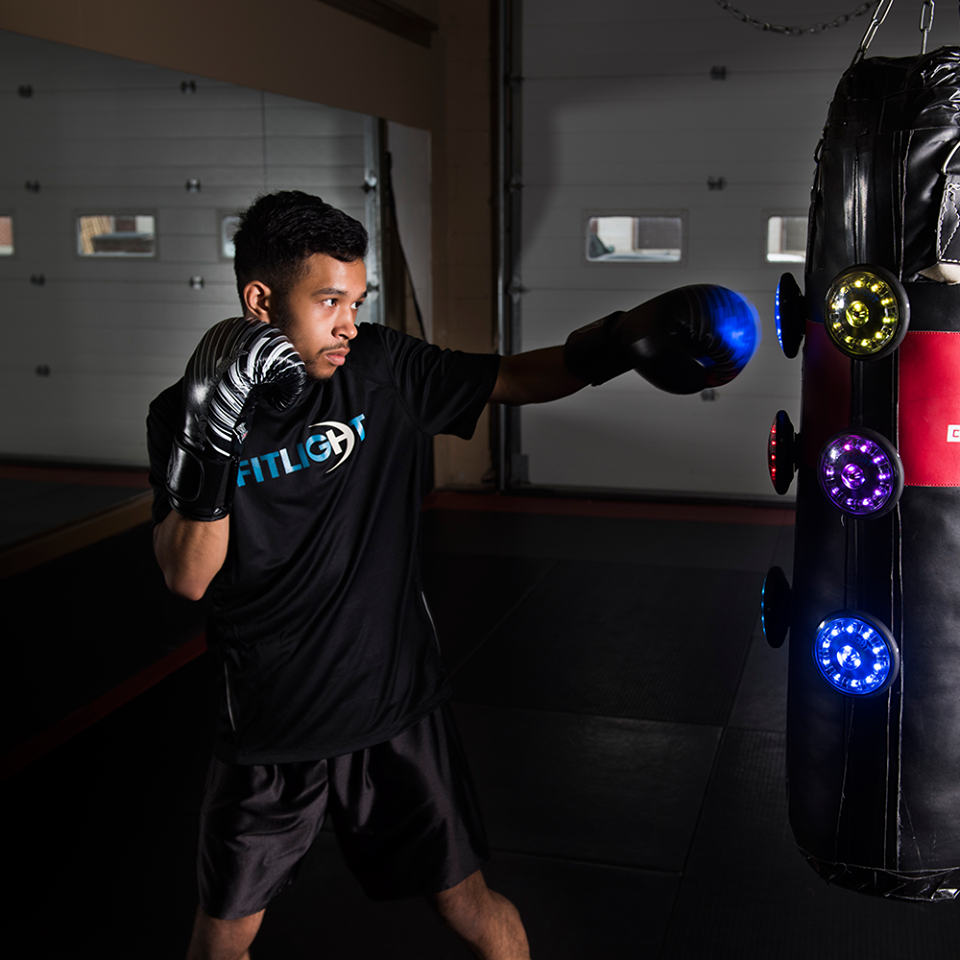
Three technologies are commonly discussed in VMRT training: FitLight, NeuroTracker, and Virtual Reality (VR). While VR can create more realistic situational simulations, this article focuses on FitLight and NeuroTracker because they represent two distinct training approaches.
FitLight is a light-based training system that asks athletes to respond quickly to illuminated targets. It seems relevant to boxing because fighters must constantly translate visual information into fast body movements. One small study involving 16 elite Albanian boxers found that 12 weeks of FitLight training improved reaction time and punch frequency more than basic boxing training (Bendo et al., 2025). This suggests that VMRT may be trainable through targeted visual-motor tasks. However, because this evidence comes from a single small study, more research is needed to confirm whether FitLight reliably improves VMRT and whether those improvements transfer to real boxing performance.
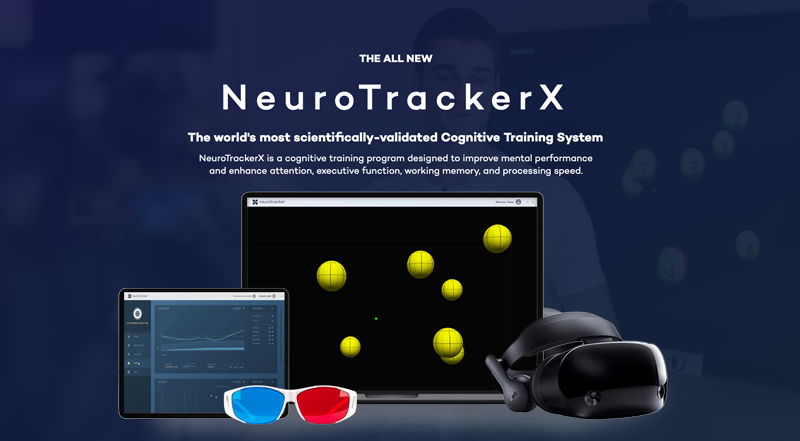
NeuroTracker, created in 2009 by Professor Jocelyn Faubert, is a screen-based training tool designed to develop visual attention by requiring users to track multiple moving objects simultaneously. In theory, this could help boxers, as they must monitor several cues simultaneously, including hand position, footwork, rhythm, distance, and changes in movement. However, the evidence is mixed. A study of elite athletes found that NeuroTracker improved performance on the trained task, but did not significantly transfer to broader executive functions such as attentional control, inhibition, shifting, or working memory (Moen et al., 2018). A systematic review also found limited evidence that improvements with NeuroTracker transfer to broader cognitive skills or real-world sport performance (Vater et al., 2021). Similarly, Fransen (2024) argued that general perceptual or cognitive training does not always transfer to sport performance. This matters because improving at a training task does not necessarily mean improving in the ring.
Boxing-specific evidence is also limited. One study of 20 youth amateur boxers aged 15–18 found that eight weeks of NeuroTracker training improved attention, but did not significantly improve decision-making speed (Tanowsri et al., 2026). This suggests that NeuroTracker may strengthen attention, but may not improve the full process of seeing, predicting, deciding, and moving.
Exercise-Based Training
Exercise-based methods approach VMRT from the body side of the brain–body system. Rather than reacting to screens or lights, these methods use physical training to prepare the body to respond faster to visual information. One study on young male boxers found that Closed-Kinetic-Chain Exercises, such as trap bar squats, lunge walks, and deadlifts, significantly improved visual reaction time, while Open-Kinetic-Chain Exercises did not (Okut & Kızılca, 2024). However, this finding should be interpreted with caution because the study had a small sample, no control group, and no long-term follow-up. Another study tested a bench-press-based Post-Activation Performance Enhancement (PAPE) protocol and found that it did not improve amateur boxers’ VMRT (Ilbak et al., 2024).
Overall, exercise-based training is a promising area, but the evidence remains limited. Responses may also vary between individuals depending on factors such as training history, fitness level, fatigue, and exercise type. More boxing-specific studies are needed before firm conclusions can be made.
The Final Bell: Where to Go From Here
Boxing performance is not built on one factor alone. Strength, conditioning, technique, tactics, recovery, and psychology all matter. However, VMRT helps explain why skilled boxers can appear one step ahead. Current research suggests VMRT may be trainable, but the evidence remains limited and mixed. Future studies should test additional boxing-specific methods, especially safe technical sparring, to determine whether training perception and prediction can transfer into real performance without unnecessary hard contact. Personally, I would like to investigate this further by testing situational safe sparring, where fighters wear protective gear and practise specific fight scenarios without hard punches, to assess whether it can improve VMRT.
Reference
Bendo, A., Bushati, S., & Bushati, M. (2025). Comparison of training methods for improving reaction time and punch frequency at elite boxers. Journal of Physical Education, 36(1). https://doi.org/10.4025/jphyseduc.v36i1.3602
Borysiuk, Z. (2025). Eye-tracking analysis of perceptual-cognitive processes in combat sports: A narrative review. Ido Movement for Culture. Journal of Martial Arts Anthropology. https://doi.org/10.14589/ido.25.3.10
Brinkman, C., Baez, S. E., Quintana, C., Andrews, M. L., Heebner, N. R., Hoch, M. C., & Hoch, J. M. (2020). The reliability of an upper- and lower-extremity visuomotor reaction time task. Journal of Sport Rehabilitation, 30(5), 828–831. https://doi.org/10.1123/jsr.2020-0146
Cid-Calfucura, I., Herrera-Valenzuela, T., Franchini, E., Falco, C., Alvial-Moscoso, J., Pardo-Tamayo, C., Zapata-Huenullán, C., Ojeda-Aravena, A., & Valdés-Badilla, P. (2023). Effects of strength training on physical fitness of Olympic combat sports athletes: A systematic review. International Journal of Environmental Research and Public Health, 20(4), 3516. https://doi.org/10.3390/ijerph20043516
Eastwood, C. (Director). (2004). Million dollar baby [Film]. Warner Bros. Pictures.
Fransen, J. (2024). There is no supporting evidence for a far transfer of general perceptual or cognitive training to sports performance. Sports Medicine, 54(11), 2717–2724. https://doi.org/10.1007/s40279-024-02060-x
Ilbak, I., Stojanovic, S., Rydzik, Ł., Ambroży, T., Wąsacz, W., Kasicki, K., Ilbak, Y. E., Jorgic, B. M., & Wieslaw, B. (2024). Examining the effects of post-activation performance enhancement on boxers’ visual reaction time. Ido Movement for Culture. Journal of Martial Arts Anthropology, 24(4). https://doi.org/10.14589/ido.24.4.4
Limballe, A., Kulpa, R., Vu, A., Mavromatis, M., & Bennett, S. J. (2022). Virtual reality boxing: Gaze-contingent manipulation of stimulus properties using blur. Frontiers in Psychology, 13, 902043. https://doi.org/10.3389/fpsyg.2022.902043
Lorenco-Lima, L., Coimbra, D., & Andreato, L. V. (2025). Mental strength, resilience, and grit in combat sports: Comparing practitioners, non-practitioners, and competitors. International Journal of Sport and Exercise Psychology, 1–12. https://doi.org/10.1080/1612197x.2025.2584548
Moen, F., Hrozanova, M., & Stiles, T. (2018). The effects of perceptual-cognitive training with Neurotracker on executive brain functions among elite athletes. Cogent Psychology, 5(1), 1544105. https://doi.org/10.1080/23311908.2018.1544105
NeuroTracker. (2018, February 15). Professor Faubert introduces the concepts of NeuroTracker. https://www.neurotrackerx.com/post/professor-faubert-introduces-concepts-neurotracker OpenAI. (2026). AI-generated image of a boxing coach with a quotation from Million Dollar Baby [Image]. ChatGPT.
Tanowsri, R., Chainarong, A., Putthithanasombat, K., Hiruntrakul, A., Philuek, P. P., & Kusump, S. (2026). The effect of NeuroTracker training on attention and decision-making speed in amateur youth boxers. Ido Movement for Culture. Journal of Martial Arts Anthropology. https://doi.org/10.14589/ido.26.2.10
Thomson, E., & Lamb, K. (2016). The technical demands of amateur boxing: Effect of contest outcome, weight and ability. International Journal of Performance Analysis in Sport, 16(1), 203–215. https://doi.org/10.1080/24748668.2016.11868881
Vater, C., Gray, R., & Holcombe, A. O. (2021). A critical systematic review of the Neurotracker perceptual-cognitive training tool. Psychonomic Bulletin & Review, 28(5), 1458–1483. https://doi.org/10.3758/s13423-021-01892-2
Xiao, Y., Zhong, H., Gao, D., Zhuang, M., Long, Y., Wei, Q., Wang, D., Zhang, P., Zhao, Z., & Chen, C. (2025). The relationship between visual ability assessment and competitive boxing performance in female amateur boxers. Frontiers in Physiology, 16, 1639227. https://doi.org/10.3389/fphys.2025.1639227
Yordanova, Y., Pulev, T., Kirilova, K., Ruteva, M., & Stambolieva, K. (2023). Sport experience and visual motor reaction time of boxers. Journal of Physical Education and Sport, 23. https://www.efsupit.ro/images/stories/may2023/Art146.pdf
Zhang, Z., Piras, A., Chen, C., Kong, B., & Wang, D. (2022). A comparison of perceptual anticipation in combat sports between experts and non-experts: A systematic review and meta-analysis. Frontiers in Psychology, 13, 961960. https://doi.org/10.3389/fpsyg.2022.961960