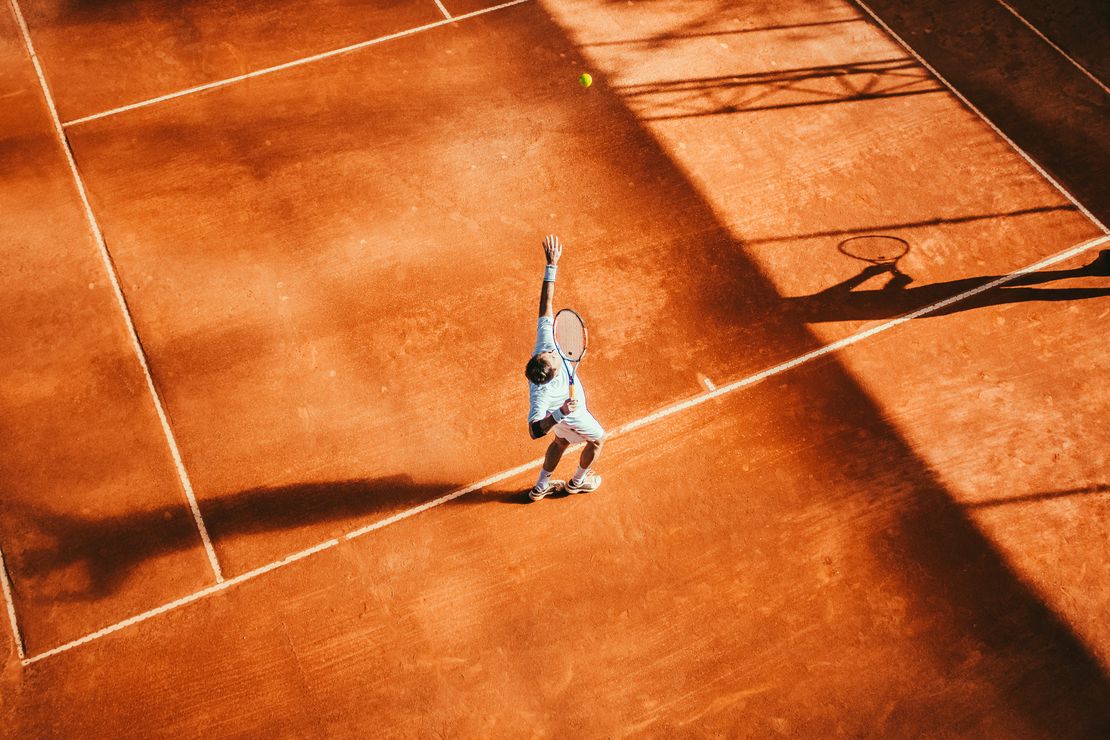
For the Late Bloomers: Your Timeline Is Not Your Limit
- Xander Chu
- Coaching
- August 31, 2026
For the Late Bloomers: Your Timeline Is Not Your Limit
Tennis loves a prodigy.
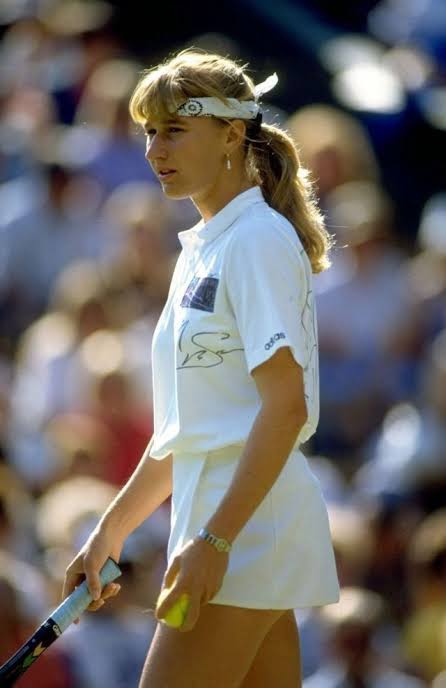
We marvel at players such as Steffi Graf, Iga Świątek and Mirra Andreeva—players who reached extraordinary heights while they were still very young. Their achievements deserve admiration. But when we celebrate early success as the ideal pathway, we can accidentally turn development into a race. We begin to treat speed as proof of talent and delay as evidence that someone is not good enough.
That is simply not true.
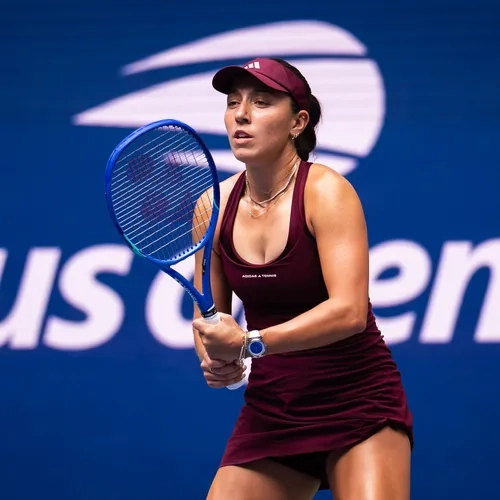
Some players develop early. Others need more time for their bodies, games and identities to come together. Stan Wawrinka did not win his first Grand Slam title until he was 28. Jessica Pegula reached the highest level of her career in her late 20s and early 30s, following years of injuries, setbacks and gradual progress. Her story reflects an idea that is especially meaningful to me: sometimes a person develops first, and the player develops later.
There is nothing wrong with that order.
Early success is not the same as lasting success
Winning young is an achievement, but it is not a guarantee of longevity. A player may be technically advanced enough to compete at an elite level before their body is ready for the workload that comes with it. Sudden success can quickly produce more matches, more travel, greater training demands and enormous expectations.
Emma Raducanu’s breakthrough showed how rapidly a young athlete’s life can change. Dominic Thiem followed a different path, building an established elite career before injuries disrupted it. Their experiences are not identical, and injuries rarely have one simple cause. Still, both remind us that reaching the summit and remaining healthy enough to stay there are separate challenges.

Accelerating development is not always the same as supporting development.
The goal should not be to make every athlete mature as quickly as possible. It should be to help each athlete develop at a pace their body and mind can sustain.
Workload must be reasonable
More training is not automatically better training.
Young players need enough repetition and competitive exposure to improve, but they also need recovery. Bones, tendons, muscles and coordination do not all mature at exactly the same rate. Growth spurts can temporarily change balance, timing and movement. Two players of the same chronological age may therefore have very different physical capacities.
A sensible workload responds to the athlete in front of us. It considers training intensity, tournament schedules, sleep, school, stress, injury history and biological maturation. Rest is not evidence of laziness. Sometimes it is the training decision that allows the next ten years of development to happen.
Coaches and parents should ask more than, “How much can this player tolerate today?” We should also ask, “What will allow this player to keep developing tomorrow?”
The person matters as much as the player
Off-court development is not a distraction from tennis. It is part of becoming a sustainable athlete.
A player needs opportunities to form friendships, continue their education, discover interests outside tennis and build an identity that does not disappear after a loss. They need to learn how to communicate, establish boundaries, make decisions and understand themselves.
These experiences can eventually strengthen performance. A player with a secure sense of self may be better able to process defeat without treating it as a verdict on their worth. They may communicate more honestly with coaches, make wiser decisions about their body and remain motivated for reasons that genuinely belong to them.
Developing the person first does not mean abandoning competitive ambition. It means building someone capable of carrying that ambition without being consumed by it.
Biological maturity follows no universal schedule
Development is not linear, and it is not identical across athletes.
Some players gain strength, speed and coordination earlier. Others mature later. Some understand tactics immediately but need years to develop the physical tools to express that understanding. Others possess impressive athleticism early and require more time to build emotional regulation, technical variety or confidence.
This is why comparisons can be so damaging. A 16-year-old should not conclude that their potential has expired because another 16-year-old is already winning professional matches. They may be standing at completely different stages of biological and psychological development.
Chronological age tells us how long someone has been alive. It does not tell us when all the pieces of their game will align.
Patience is an active skill
Being patient does not mean sitting still and hoping something changes. It means continuing to work without demanding that progress appear on someone else’s schedule.
For a late bloomer, belief is not blind optimism. It is the willingness to keep gathering evidence through training: a stronger body, a more reliable pattern, better recovery, clearer decision-making and a healthier response to pressure. These improvements may not immediately produce a trophy, but they are still part of becoming the player who can eventually win one.
Progress can be quiet for years before it becomes visible to everyone else.
To every late bloomer
You are not behind simply because someone else arrived sooner.
Protect your body. Train with purpose, but give yourself permission to recover. Develop your education, relationships, character and life beyond the court. Let your game mature alongside the person you are becoming.
Believe in yourself, but do not punish yourself for needing time.
Tennis history is full of athletes whose greatest achievements arrived after the age at which others had already written them off. Their stories do not prove that everyone will become a Grand Slam champion. They prove something more useful: an early timeline is not the only valid timeline.
Some flowers bloom in spring. Others need another season.
The important thing is not to bloom first. It is to be given the time, care and conditions to bloom fully.
Don’t believe me? Let these late bloomers convince you
Tennis history offers plenty of evidence that success does not follow a universal timeline:


- Stan Wawrinka won his first Grand Slam title at 28 and all three of his major titles after that age. He reached his career-high ranking of world No. 3 at 29.
- Jessica Pegula established herself among the world’s best in her late 20s and early 30s after years of injuries and gradual progress. She reached her first Grand Slam singles final at 30.
- Li Na won her first Grand Slam title at 29 and her second at 31, becoming the first Asian singles player to win a major.
- Angelique Kerber won her first two Grand Slam titles and became world No. 1 at 28.
- Francesca Schiavone won her first and only Grand Slam singles title at Roland Garros shortly before turning 30.
- Flavia Pennetta won her first Grand Slam singles title at the US Open at 33.
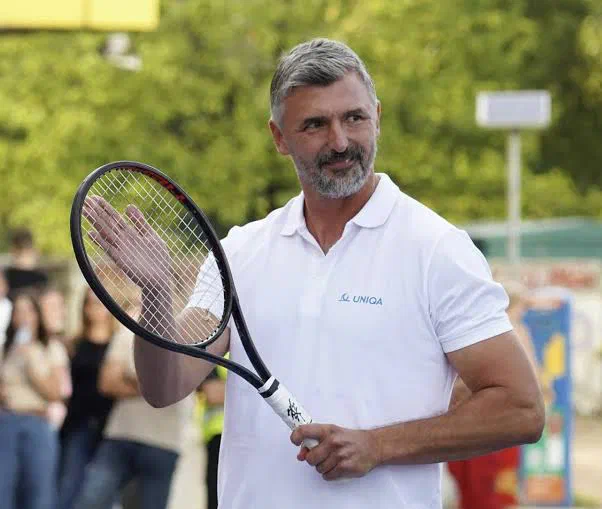
- Goran Ivanišević, who later coached Novak Djokovic for 6 years, finally won Wimbledon at 29 after losing three previous finals—entering the tournament as a wildcard.
- Kevin Anderson reached his first Grand Slam final at 31 and his second at 32.
- Víctor Estrella Burgos entered the top 100 for the first time at 33 and won his first ATP title at 34.
- Tatjana Maria reached her first Grand Slam semifinal at Wimbledon at 34, after becoming a mother and returning to professional tennis.
These players did not suddenly become talented in their late 20s or 30s. Their eventual success was built through years of work, setbacks, adaptation and persistence. Their results became visible later, but the development behind those results had been happening all along.
A slower journey is not necessarily a failed one. Sometimes it simply takes longer for the body, game, opportunity and person to be ready at the same time.